
cHANGE HOW YOU CARE FOR YOURSELF
who I work with:
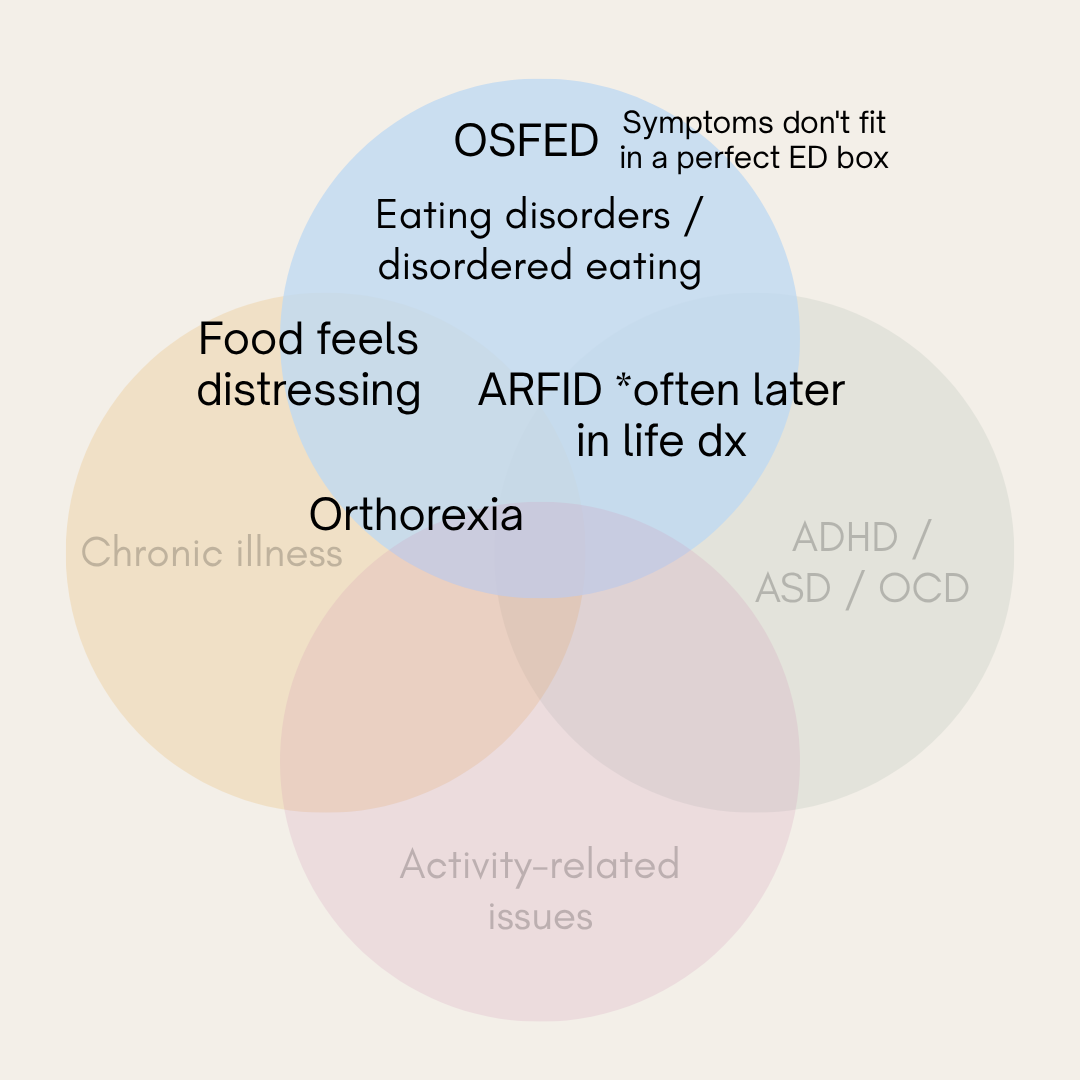
eating disorders & disordered eating
If you know your food relationship isn’t the best, maybe it’s time to explore what’s really going on. Food issues can impact more than health; your relationships, how you spend your time, and overall quality of life.
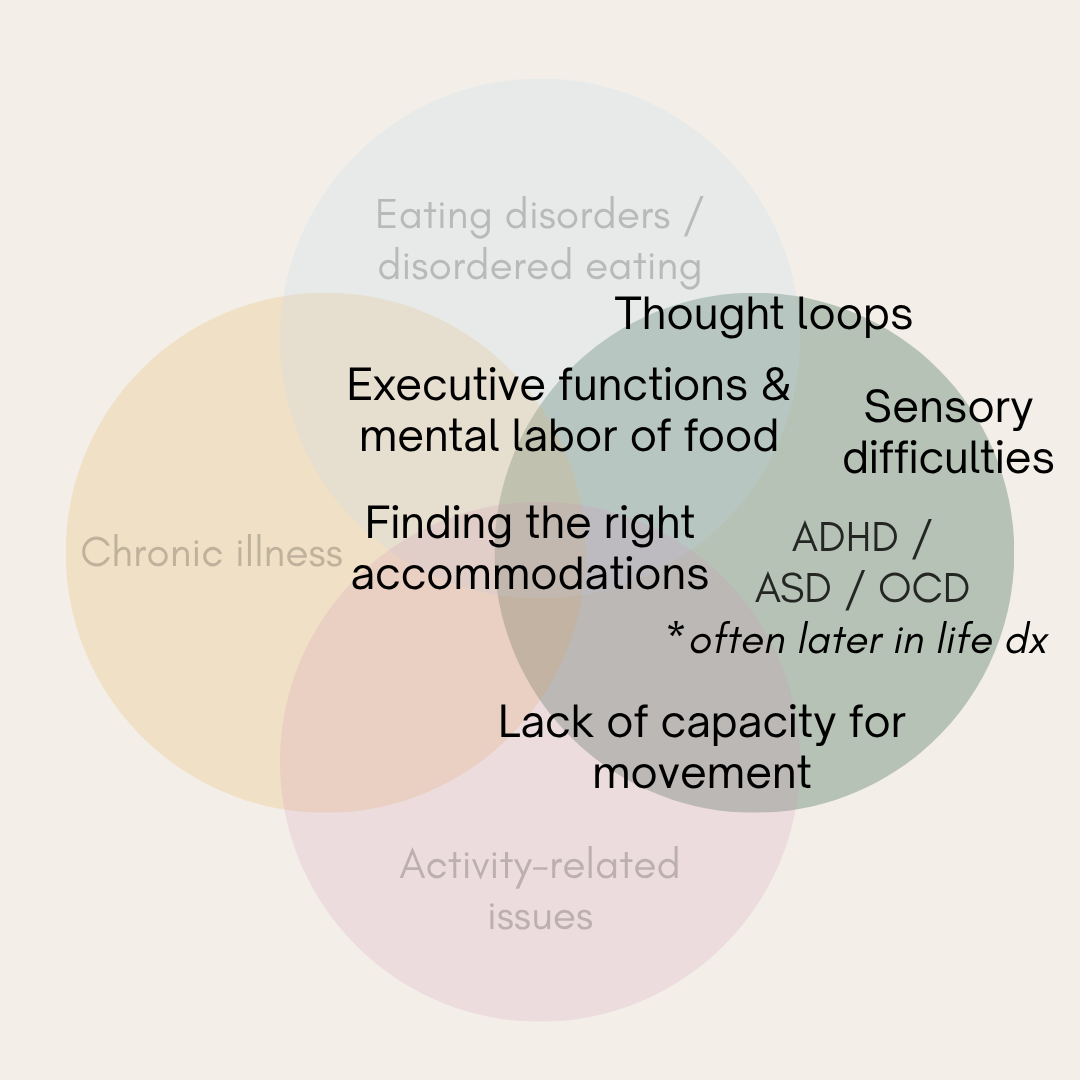
neurodivergence
Specifically ADHD, ASD, and OCD. Often later in life diagnoses. These diagnoses massively impact how a person approaches food and care for themselves in general!
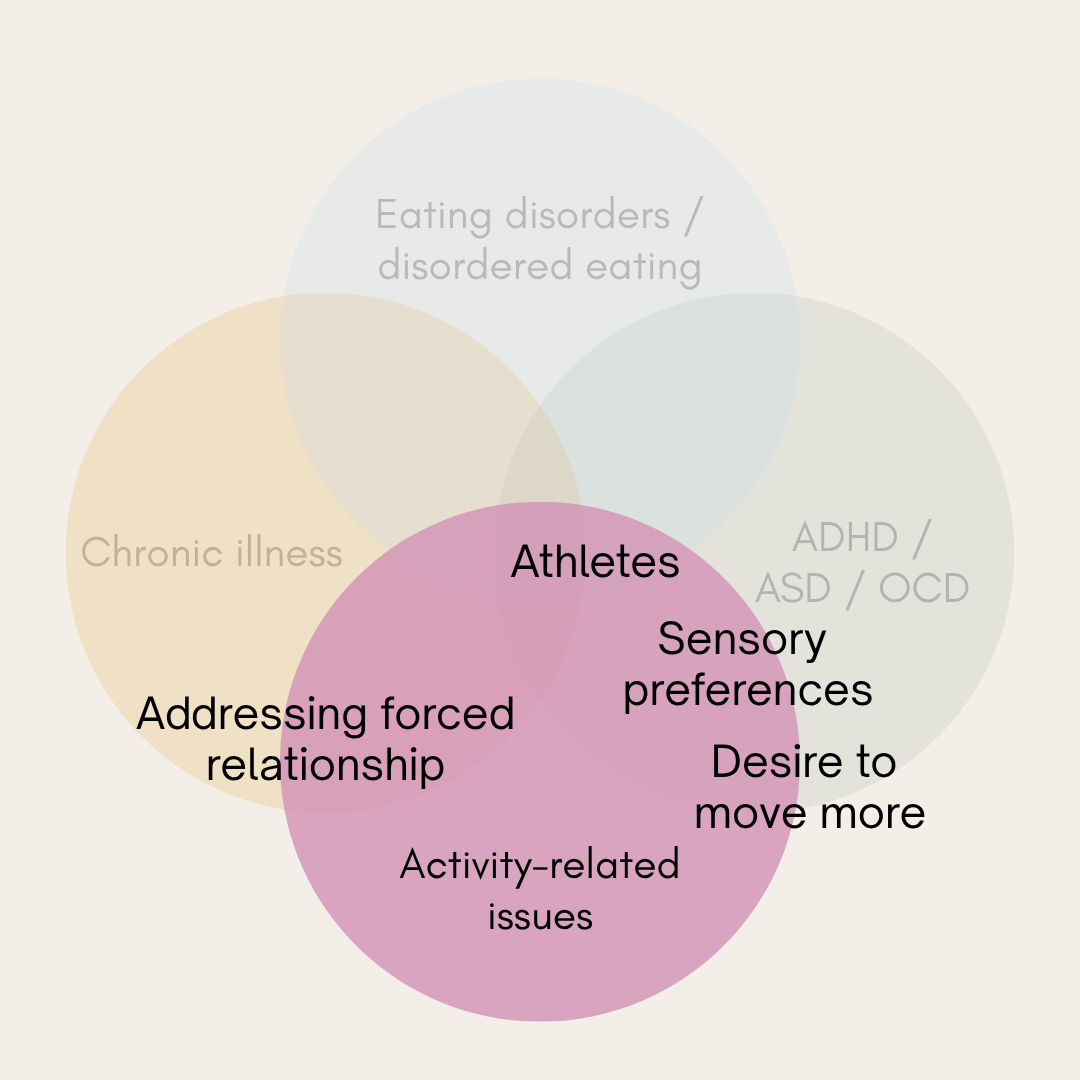
Movement-related struggles
Do you wish you moved more? Do you struggle with consistency? Did you used to move a lot, as an athlete or otherwise and now can’t understand why moving is so difficult? Does movement feel compulsive or the only way to address anxiety?
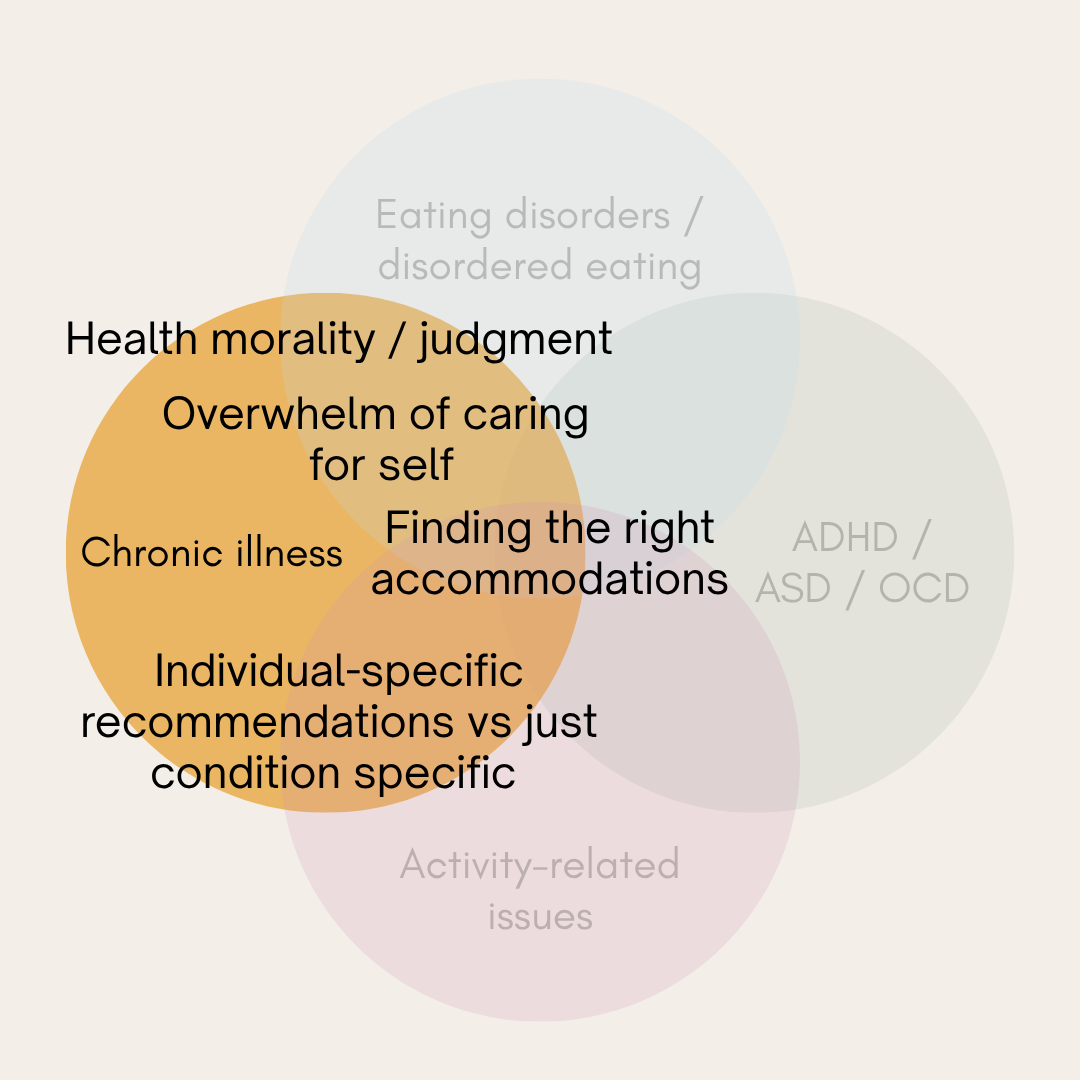
Chronic illness
Additional medical conditions might be making health more confusing. Do you find doing “everything you’re supposed to do” either incredibly overwhelming or not even making a difference?
Many of my clients exist in the overlap
1:1 cOUNSELING
Does food feel dysfunctional? Complicated? Like there’s no winning? Work with a dietitian 1:1 to discuss health habit overwhelm and symptom management.
What the work looks like:
Getting to know you, your life, and what’s troubling you most about food dynamics and taking care of yourself.
Determining what’s behind your goals to make sure they’re in alignment with your values, rather than the expectations of others.
Education to help determine what behaviors are worth the time and energy and which ones you can let go of!
Balancing the helpfulness of routines with much needed flexibility when it comes to health habits - learning what to prioritize and when.
Collaborating on accommodations and making food more accessible.
Supportive mechanisms to help you challenge your relationship with health and improve quality of life.
In-network with Blue Cross Blue Shield, additional pricing information listed in the FAQ section below

FAQs
1
What do sessions look like?
Sessions are very conversational. Initial assessments are similar to other provider assessments to get medical history and lifestyle behaviors but also include discussions regarding your food relationship history when appropriate.
Once goals are established, follow-ups look like:
altering goals when necessary
answering any questions that have come up since your last visit
additional education requested or when it’s relevant to discussions
deep-dives into food, body, and health relationships & mindsets
and of course, trouble-shooting suggestions!
How do I get started?
2
For clients: Getting started is simple. Schedule a discovery call through the links on this website. Once your discovery call is scheduled and confirmed, we’ll have a 15 minute conversation to see if we’re a good fit and get your initial appointment set up.
For professionals: Reach out through our contact form
Do you take insurance?
3
Fed and Friendly is in-network with Blue Cross Blue Shield benefits.
If you have a different insurance you may use HSA or FSA cards or I can provide a superbill for you to submit to your insurance for potential reimbursement.
Check your out-of-network benefits! You never know what you might find. While you may have to pay upfront for services, you could get a substantial refund from your insurance.
60 minute initial assessment - $230
55 minute follow-up - $185
On a budget?
Follow-up session prices are proportional to session length. Shorter session = lower price.
Sliding scale pricing available as well.
How can I contact you for other questions?
4
You can reach us anytime via our contact page. We aim to respond quickly—usually within the week.